The summer months have been marked by a divergence in fortunes across global markets. Japan’s stock market has enjoyed a resurgence that carried the Nikkei 225 to multi-decade highs, a development that has attracted widespread international attention. At the same time, the major economies of continental Europe have faced more persistent difficulties, with both France and Germany contending with structural headwinds that continue to weigh on growth. In the United Kingdom, the policy debate has turned increasingly towards the forthcoming Autumn Budget, which arrives in the context of persistent inflation and careful manoeuvring from the Bank of England.
Japan’s recent strength owes much to a combination of domestic reforms and international flows. Corporate governance changes urged by the Tokyo Stock Exchange have drawn favourable notice, while a measured shift by the Bank of Japan away from its long-standing policy of ultra-low interest rates has reassured investors that liquidity will not be withdrawn too abruptly. Capital seeking diversification has also flowed into Tokyo, particularly as China’s economic outlook has cooled. The question now is whether the positive sentiment can translate into sustained domestic momentum, supported by wage growth and consumption, or whether it remains largely an externally driven rally.
Across the Channel, the picture has been more subdued. France continues to wrestle with political uncertainty and fiscal reform, with debt levels under scrutiny in Brussels and consumer sentiment fragile. Germany, traditionally Europe’s industrial powerhouse, has struggled with weak exports and a slowdown in manufacturing output. Energy costs remain a drag and the hoped-for rebound in industry has yet to materialise. Taken together, these challenges illustrate the pressures facing the eurozone at a time when broader global growth is also moderating.
The United Kingdom, meanwhile, faces its own moment of decision. Inflation, which had eased earlier in the year, rose again in July to 3.8%, frustrating expectations of a smoother downward path. The Bank of England’s move to cut the base rate to 4.25% in May provided some temporary relief, but recent data have reinforced a more cautious tone within the Monetary Policy Committee. Attention now turns to the Autumn Budget, where the Treasury is expected to confront the delicate balance between maintaining market credibility and addressing cost-of-living pressures. Proposals under discussion, including a levy on banking sector reserves linked to quantitative easing, have already prompted considerable debate.
Across the Atlantic, the United States has presented a different balance of resilience and caution. Economic growth proved stronger than first reported in the second quarter, with gross domestic product expanding at an annualised rate above three per cent, suggesting domestic demand has been more durable than anticipated. Inflation has moderated gradually, though both headline and core measures remain above the Federal Reserve’s target. Labour market conditions have softened slightly, with unemployment moving above 4.0% and long-term joblessness creeping higher. The Federal Reserve left interest rates unchanged through the summer, maintaining its focus on the incoming data while continuing to reduce the size of its balance sheet. Markets responded positively, with major indices reaching new highs in late August, supported in particular by another season of robust technology earnings and ongoing enthusiasm for artificial intelligence. The outlook will hinge on whether disinflation can continue without undermining consumer spending, how the labour market evolves into the autumn and what guidance the Federal Reserve provides as policymakers weigh the timing of any eventual adjustment.
Major U.S. banks and investment firms have adjusted their year-end S&P 500 projections for 2025. Goldman Sachs raised its target to 6,900, Bank of America also increased its forecast to 6,666, driven by robust consumer spending and corporate earnings. Conversely, J.P. Morgan revised its outlook downward to 6,000, expressing caution due to ongoing trade tensions and potential economic headwinds.
As the final quarter of the year approaches, several themes appear central to the economic conversation. Japan must demonstrate whether its equity rally can be underpinned by domestic fundamentals. France and Germany need to navigate their respective fiscal and industrial difficulties if the eurozone is to regain momentum. The United Kingdom’s Budget will be scrutinised for the signals it sends about fiscal stability and the direction of policy into 2026. In the United States, the interaction of growth, inflation and central bank communications will remain a key driver of sentiment. These issues, together with the ongoing challenge of managing inflation and interest rates globally, will ensure that markets and policymakers alike remain alert through the closing months of the year.
Disclaimer: The author is an active, regulated Director and the founder of Moor Independent Financial Advisers Ltd. Moor IFA is a local, independent financial planning and investment management firm serving private clients and trustees. This guide is for information purposes and does not constitute financial advice, which should be based on your individual circumstances.
The value of investments may go down as well as up and you may get back less than you invest. Past performance is not a reliable indicator of future performance. This article is for information purposes and does not constitute financial advice, which should be based on your individual circumstances.
Jonathan Cotty, Chartered FCSI

Global markets remain poised at very high levels amid uncertainty over the behaviour and plans of Donald J Trump, 47’th President of the United States. Trump’s intervention in global marketplaces via tariffs, autocratic style and his decision to speak directly with Putin regarding the Ukraine conflict, have caused widespread consternation. The full, long-term impact and ramifications of these brash decisions are still being coldly evaluated.
In March 2024, the UK CPI inflation reading was 3.2%. By September 2024, it had fallen to 1.7%. The following monthly readings were 2.5%, 2.6%, 2.5% and for
January 2025, 3%. The anticipation was for a reading of 2.8%. Higher, and particularly consistently increasing, levels of inflation make it more difficult for the Bank of England to cut interest rates. This has been reflected by market participants no longer fully pricing in two cuts to UK interest rates this year. Whilst this may normally provide strength for the pound, reaction was muted. Participants remain cautious.
Confidence in the ability of the Labour government to deliver on its growth plans appears depressed. The Bank of England said earlier this month that it had
halved its growth forecast for 2025, from the 1.50% it was expecting in November 2024, to just 0.75%. Meanwhile, the cost of borrowing for the UK government has risen, whilst actual levels of borrowing continue to spiral -
public sector net borrowing was £17.8BN in December, more than £10BN higher than a year earlier. Reeves has also changed the rules to facilitate a further £80BN of borrowing for infrastructure projects; a decision many market participants have taken a dim view of given the near
100% to debt GDP ratio the UK faces, compared to less than 45% before the financial crisis of 2007-2008. The Chancellor’s fiscal headroom of £9.9BN evaporated within months of the budget announcement, whilst the party is in a straitjacket of its own making with respect to additional tax rises due to the pledges it has made to the electorate. Despite these pledges, many consider that without a sudden, growth miracle,
Labour will be forced to implement additional tax rises on the electorate in short order.
The US, further to their recent election, now appears to be suffering a similar fate to the UK. A recent slew of data shows
consumer confidence in January 2025 fell to the lowest level since August 2021, whilst long-term inflation expectations spiked to levels not seen since 1995. The
services purchasing managers’ index slipped into contraction, whilst home sales in January dropped more than experts had predicted and the services sector displayed a dip in activity. According to S&P Global chief economist Chris Williamson, US businesses' optimism has evaporated amid a darkening picture of heightened uncertainty. The rally in technology stocks is also reversing amidst fears about China’s Deepseek model, threatening to disrupt the technology marketplace with a cheaper alternative to western counterparts.
Trump is threatening harsh tariffs, with severe financial implications and consequences, against formerly friendly trading counterparts. His style of governance and the number of Executive Orders he has signed are a serious concern for many in Congress who fundamentally believe in democracy, whilst Trump is further incensing many people by extending overtures to Vladimir Putin. For clarity, an Executive Order is a written order issued by the president to the federal government which does not require congressional approval. Executive orders are controversial because they bypass approval from Congress, allowing the president to act on his own.
Europe’s economic outlook and production figures remain relatively depressed. For example,
new car sales in Europe were down by 2.10% in January, as a jump in fully electric and hybrid-electric car registrations in its main markets was not enough to compensate for falling petrol and diesel sales. The eurozone's two largest economies, Germany and
France, both contracted in the fourth quarter, whilst the
Italian economy stagnated. The German economy shrank by 0.20% in the final quarter of 2024 compared with the previous Quarter and
is forecast to grow by just 0.30% this year.
2024 saw stock market valuations in developed and many developing nations, such as India, hit record highs. Many would argue a pullback and some profit taking was inevitable this quarter. Looking past the immediate doom and gloom and further into 2025 is difficult at present, due primarily to the new American president. His alarmingly autocratic style of governance is both impossible to ignore and extremely difficult to predict. The American economy is always significant due to its size, but prior to Trump’s presidency it was a bright spot within a global economy that was widely struggling to gain traction. If America falters in 2025, it may have broad and potentially severe repercussions on the global economy.
Also in the global mix is inflation and the strength of the dollar; the latter has a knock-on effect to commodities as they are priced in dollars and also affects Emerging Markets which may often struggle in the face of a strong dollar. It is certainly a complicated narrative to navigate at present, but bright spots and winners may often be found and volatility may open up opportunities for the knowledgeable investor. Broadly speaking, market participants would appear to be taking some profits, but not panicking. This suggests that, underlying the immediate caution, there remains a broad sentiment that there are reasonable grounds to anticipate medium to long-term growth over the course of 2025.
Disclaimer: The author is an active, regulated Director and the founder of Moor Independent Financial Advisers Ltd. Moor IFA is a local, independent financial planning and investment management firm serving private clients and trustees. This guide is for information purposes and does not constitute financial advice, which should be based on your individual circumstances.
The value of investments may go down as well as up and you may get back less than you invest. Past performance is not a reliable indicator of future performance. This article is for information purposes and does not constitute financial advice, which should be based on your individual circumstances.
Jonathan Cotty, Chartered FCSI
Disclaimer: The author is an active, regulated Director and the founder of Moor Independent Financial Advisers Ltd, a local, independent financial planning and investment management firm serving private clients and trustees. This guide is for information purposes and does not constitute financial advice, which should be based on your individual circumstances.
The value of investments may go down as well as up and you may get back less than you invest. Past performance is not a reliable indicator of future performance. The value of pensions and any income from them can fall as well as rise. You may not get back the full amount invested. The Financial Conduct Authority (FCA) does not regulate Inheritance Tax Planning or Trust advice.
This quarter we are reflecting upon the UK change of government and how the forthcoming Labour budget may affect your finances.
In the UK, Labour have announced their intention that the ‘broadest shoulders should bear the heavier burden’. This statement was made during a speech by Prime Minister Sir Keir Starmer on 27’th August. This is widely interpreted to imply that there are tax rises affecting those on higher incomes in the pipeline within the upcoming budget on 30’th October.
In terms of economic output, the UK picture continues to improve with a reading of 53.4 in August on the S&P PMI, or Purchasing Manager's Index, which was an improvement on July which read 52.8. A reading above 50 on this scale is considered a growth figure, whilst a figure below 50 indicates contraction. Concerns abound that the relatively fragile economic recovery may be crushed by the first Labour budget in October, which has promised additional taxation will be applied to current, record-high levels. Some consider it somewhat counter-intuitive to focus on a mantra of delivering economic growth, whilst coupling that vision with additional taxation. In general terms, many would argue that economic growth is usually achieved by facilitating investment, which in turn normally relies upon a greater amount of liquidity, or cash, to be made available within the local economy. Whilst this is often achieved by central banks lowering interest rates, thus making it cheaper for citizens and businesses to access finance and borrow money, governments may also act by lowering the corporate tax burden, where possible, to enable companies to invest in additional resources and grow, ultimately resulting in job creation and wage increases across the board.
In contrast, absorbing additional cash through higher taxation and then directly redistributing this money in certain ways, for example through additional pay rises to select public sector employees, may simply serve to fan the flames of inflation; the cash is still being injected back into the economy but in the form of increased spending power from certain individuals, rather than through underlying investment and projects that may result in tangible, long-lasting economic growth.
It remains to be seen exactly how this Labour government intend to achieve the economic growth that they are aiming for. They have ruled out any increases to National Insurance, VAT or Income Tax.
One measure considered to be in the pipeline includes a flat rate of 30% on pension contributions. At present, income tax is effectively refunded on pension contributions on the basis of what would have been paid (e.g. 20%, 40% or 45%) and most may contribute up to what they earn (with a ceiling of £60,000 per annum before tax on pension contributions becomes due). A flat rate of 30% would mean that higher earners will pay 10% in tax on their pension contributions, additional rate tax payers would pay an extra 15%, whilst basic rate taxpayers would receive a 10% boost to their pension contributions. If implemented, this is forecast to raise £2.7Billion a year.
Inheritance tax (IHT) is under scrutiny, with the current allowances for the passing on of agricultural land and business relief being touted as potential targets for Labour. However, many fear there will be further, widespread reform to the current system and existing allowances with respect to IHT.
The tax-free passing on of pension pots is also considered to be under review, with either inheritance tax or income tax, or possibly both, being applied to all these savings upon death. At present, no IHT is normally due and income tax is potentially payable on the pension monies only if the plan holder dies age 75 or above.
Council tax is a potential target for Labour, given the current system is based on house prices estimated in 1991. This system could receive a complete overhaul.
Capital Gains Tax (CGT) is currently charged at 10% or 18% (additional residential property) for basic rate taxpayers and 20% or 24% for higher or additional rate earners and 28% on carried interest. Initially the Liberal Democrats stated they would rethink these tax bands to be more similar to income tax – this would raise an estimated £5.2Billion a year.
A report by the Resolution Foundation (a Labour policy thinktank) has argued that £1Billion could be saved each year by capping ISA savings at £100,000.
Income tax thresholds are to be frozen until April 2028, a process known as ‘fiscal drag’ as inflation causes prices to rise whilst the amount of income tax payable is not being adjusted to reflect this. This is a form of stealth taxation.
Other planned tax raids that have been flagged openly by Labour include the windfall tax on the profits of oil and gas companies, which is to be extended to the end of the Parliament and increased by 3%, whilst investment allowances for this sector are to be removed. Private schools will have their charitable status revoked, likely to be implemented from January 2025, or possibly September of the same year. With respect to ‘non-doms’, widespread reform is anticipated alongside a plan to increase the Stamp Duty surcharge for non-UK residents from 2% to 3%.
Independent financial planning from a Chartered professional may assist you to navigate the inevitable changes that are going to be implemented by the current government. We will offer you this advice without charge and please bear in mind that all financial advice should be based on individual circumstances.
Jonathan Cotty, Chartered FCSI

Disclaimer: The author is an active, regulated Director and the founder of Moor Independent Financial Advisers Ltd, a local, independent financial planning and investment management firm serving private clients and trustees. This guide is for information purposes and does not constitute financial advice, which should be based on your individual circumstances.
The value of investments may go down as well as up and you may get back less than you invest. Past performance is not a reliable indicator of future performance.
Global markets have taken off in the second quarter of 2024, the Bulls leading an unstoppable charge that has seen numerous equity indices surpass their previous record highs the world over. Whilst technology initially led the way, other sectors have quickly joined the march. Much of this activity reflects the global influence of the US economy, which continues to perform strongly.
Whilst global equity markets have hit new highs, market participants remain in a state of limbo, patiently awaiting fresh inflation data each month. The eagerly anticipated rate cutting cycles across major economies are being repeatedly delayed due to persistently high levels of inflation.
The latest reading for UK inflation was 2.3%, which reflects the annual rise in inflation from April 2023 – April 2024. This is down sharply from 3.2% in March and the lowest since July 2021 when it stood at 2.0%, according to the Office for National Statistics (ONS). However, the Bank of England was anticipating a reading of 2.1%; services inflation was higher than expected at 5.9% (5.5% anticipated), along with core inflation (which includes goods but excludes energy, food and tobacco) which fell to 3.9% (anticipated 3.6%).
This data came hot on the heels of the IMF report a day earlier, within which the IMF revised its UK growth figure for 2024 from 0.5% to 0.7%, stating: "With growth recovering faster than expected, the UK economy is approaching a soft landing, following a mild technical recession in 2023. CPI inflation has fallen faster than was envisaged last year and is projected to return durably to target in early 2025.” The recent inflation data means Britain now has a lower rate of inflation than the United States, Canada, France and Germany.
However, given the inflation data was above the anticipated levels, the odds of a rate cut have once again been pushed back, with Bloomberg reporting that the market participants broadly agree that a June rate cut is off the table; the chances of the first rate cut coming in August were slashed from 80% to 40% within minutes of the data being published.
Sterling jumped on the latest inflation data, which in turn corresponded to a fall in UK equities. However, as of 22/05/2024, consider the FTSE All-Share has risen 14.84% over the past five years; 8.31% of that rise has been in 2024. The FTSE 250 meanwhile has made just 8.3% over the past five years, with 6.16% of that rise occurring year to date. Many would argue the rally does not yet look overblown within UK stocks.
Some maintain the view that the Bank of England should have commenced interest rate cuts already and remain concerned that the ongoing delay may cause the economic recovery to falter in the months ahead. British manufacturing orders contracted in May at the fastest rate since November and expectations for future price hikes abated, a recent Reuters survey showed. The Confederation of British Industry's monthly gauge of industrial orders sank to -33 from -23 in April, despite the biggest rise in output since November 2022. The survey's reading of future selling price expectations fell in May to +15 from +27, its lowest since January 2024. In simple terms, we now have a lot on the shelves, whilst the order book is looking increasingly smaller. However, the UK is primarily a Services economy and this sector grew by 0.7% in the first quarter of 2024, whilst elsewhere the production sector grew by 0.8%.
Broadly speaking, the UK outlook is considered positive, but the economic recovery appears fragile and sensitive to any potential market shocks. The IMF, whilst upgrading the UK outlook, highlighted this within its recent commentary: “As monetary policy reaches an inflection point, the timing and pace of rate cuts must carefully balance the risks of premature and delayed easing."
Elsewhere, technology stocks continue to dominate the US markets, whilst cyclical areas such as Industrials have picked up considerably. Japan remains solidly positioned, with a recent Reuters poll of equity strategists reaching consensus for a further 4.6% rise on the Nikkei by year end. The Nikkei has risen 16.4% so far this year, following a 28.2% gain in 2023.
Chinese markets remain subdued, whilst the country is becoming increasingly alienated from key markets due to political affiliations with countries such as Russia, recent comments about Taiwan and concerns over human rights abuses. The government recently announced a financial plan to tackle the overhang of real estate that exists, but the problem remains enormous. “This is a drop in the ocean given the scale of unsold stock,” said Harry Murphy Cruise, an economist at Moody’s Analytics. New home prices in April dropped at the fastest monthly rate in nine years.
India continues to strengthen and consolidate its position on the global stage and, whilst huge challenges remain, there are signs that rural parts of the country are also benefitting. The Reserve Bank of India recently stated that rural demand for fast moving consumer goods (FMCG) has outpaced urban markets for the first time in at least two years on the back of robust demand for home and personal care products. Inflation remains stubborn, coming in at 4.83% in April, from 4.85% in March.
In the EU, more centralisation is in the works. The European Union's securities watchdog recently called for powers to directly supervise cross-border financial firms and help fast-track the bloc's capital market union (CMU). Reuters reports: “There is also greater urgency due to London, Europe's biggest financial centre, becoming a competitor since Brexit.”
Jonathan Cotty, Chartered FCSI

Disclaimer: The author is an active, regulated Director and the founder of Moor Independent Financial Advisers Ltd, a local, independent financial planning and investment management firm serving private clients and trustees. This guide is for information purposes and does not constitute financial advice, which should be based on your individual circumstances.
The value of investments may go down as well as up and you may get back less than you invest. Past performance is not a reliable indicator of future performance.
A global rally in December across global markets led to some muted price action in the first month of the year. Bearish commentators began to rumble about the chance of a market correction, or a fall of up to 10%, occurring imminently. Other participants were more upbeat and took positions anticipating a good year ahead. Views on the health of the global economy appear healthily divided at present, with a range of views being expressed across media platforms. February, however, has proven to be a remarkable month in more ways than one.
Following results announced after the markets had closed the previous day, on Thursday, 22nd February, Nvidia added $277Billion in stock market value in a single trading session. This is Wall Street’s largest one-day gain in history, coming after the heavyweight chipmaker’s quarterly report beat expectations and reignited the rally fuelled by optimism about Artificial Intelligence. The company soared 16.40% to close at a record high of $785.38, lifting its market capitalisation to $1.96Trillion. The knock-on effect of this momentous move of the stock that Goldman Sachs has cited as the most important in the world, fuelled global stock markets, including Europe’s STOXX 600, Japan’s Nikkei and the US S&P 500, to close at record highs as investors sought to trade in companies affiliated to the move and optimism flooded the trading floors. Reuters reported that Short sellers betting Nvidia's stock would fall rushed to close those trades on Thursday and lost $2Billion on paper, taking their declines to more than $6.8Billion so far this year. Whilst many are suggesting the US stock market rally is becoming overdone and that a correction is due, many others remain firmly in the bull camp. There is general optimism in the US about the strength of the US economy, the global macroeconomic backdrop and the anticipation of looser monetary conditions as interest rates are potentially cut in the US and across many developed nations.
Japan has defied the bears and the stock market has closed at record highs this quarter, surpassing a peak last seen in 1989. Japan seeks to exit a deflationary environment and is now seeing signs of inflation at its target of 2% persisting and the BoJ is citing rising wage growth. In addition, many market participants have commented that company valuations do not seem stretched yet and that the market rally appears sustainable. Others disagree and currency traders have cited that the carry trade on the Yen, where participants may borrow the Japanese Yen at around 0% and invest the money within interest-bearing assets in other currencies, continues unabated. In February, the Yen touched its weakest for three months against the Euro and dropped by the same margin on sterling to hit its lowest since late 2015 at 190.83. It also made nine-year nadirs on the Australian and New Zealand dollars. It has fallen 6.3% against the dollar this year and is the worst performing currency of the G10. It has also been highlighted that Japan slipped into recession in the last quarter of 2023; Japan's gross domestic product (GDP) fell an annualised 0.4% in the October-December period after a 3.3% slump in the previous quarter, confounding market forecasts for a 1.4% increase. Therefore, it does not necessarily follow that interest rates will rise in the near future at all. Some analysts are warning of another contraction in the current quarter as weak demand in China, sluggish consumption and production halts at a unit of Toyota Motor Corp all point to a challenging path to an economic recovery. Meanwhile, the Nikkei powers on.
India continues to grow apace and India’s blue-chip Nifty 50 is smashing new record highs almost daily, making five of them in consecutive sessions during the third week of February. A report by Nikkei Asia in February revealed that Google plans to commence production of its Pixel smartphones in India by next quarter. The U.S. tech giant has been striving to diversify its supply chain away from China amid U.S.-China tensions, whilst seeking to capitalise on the booming smartphone market in India, the report added. This comes after the news last year that Apple was moving the production of its iPhone15 to India as the company sought to move away from Chinese production. "Indian equity markets will continue to do well due to underlying strength in the economy, acceleration of business activity, strong corporate profitability and sustained domestic inflows," stated Pankaj Murarka, director and chief investment officer at Renaissance Investment Managers, in a recent Reuters article. India’s business activity accelerated to a seven month high on solid demand in February.
In the UK, a series of positive updates from blue-chip firms have quietly been reported so far this quarter, while data points to strong growth for domestic services firms and showed business optimism at a two year high. UK markets are underperforming European and US markets this year predominately due to their focus on commodities and energy in the larger firms that compile the FTSE 100, alongside a lack of technology stocks.
In the Eurozone, France has proposed starting an EU Markets Union with a small group of countries, to unify national rules on bankruptcies, prospectuses, taxation of capital gains and so forth. "I have been trying for more than six years to build a capital markets union. My conclusion is that starting with the 27 member states is a non-starter," French Finance Minister Bruno le Maire told reporters.
Jonathan Cotty, Chartered FCSI
Disclaimer: The author is an active, regulated Director and the founder of Moor Independent Financial Advisers Ltd, a local, independent financial planning and investment management firm serving private clients and trustees. This guide is for information purposes and does not constitute financial advice, which should be based on your individual circumstances.
The value of investments may go down as well as up and you may get back less than you invest. Past performance is not a reliable indicator of future performance.
This quarter saw the commencement of open warfare in the Middle East, with Israel striking back after the slaughter imposed upon its citizens by Hamas. However, market reaction to these events has been muted; the focus for global financial market participants continues to be inflation and the dawning of the realisation that inflation and, consequently interest rates, will not reverse as quickly as initially forecast. Thus, the narrative has been that interest rates are likely to remain ‘higher for longer’.
Market reaction to good news this past quarter has varied quite unpredictably. Sometimes, good company results were cheered and the market rose; other days good data simply served to offer an additional opportunity for market participants to engage in further self-flagellation, with markets nose-diving at the thought of interest rates remaining elevated.
A correction is defined as a 10% fall from the high and this has been the overriding theme of the quarter. The S&P 500 completed a correction from its 31 July high of 4588 to hit 4117, the FTSE 100 retreated from a high of 8012 in February to hit 7291, having previously corrected to these levels twice already this year. The FTSE All-Share followed the same pattern, from 4377 to a new low for this year of 3933, a drop of 444 points or 10.14%.
A market correction is not an unusual event and, in this instance, appears to broadly reflect general uncertainty about the length of time interest rates will remain at current levels, alongside concern this will start to have an impact upon growth if it persists. This, in turn, is due to the concern that if interest rates remain elevated, this will increase the cost of regular repayments for those who owe money, especially if they initially borrowed it at lower levels of interest, alongside increasing costs for those looking to raise new money for a purchase or expansion. This includes mortgage holders, existing borrowers and companies looking to raise finance in order to grow, alongside bigger corporates rolling over larger debt burdens into a very different interest rate environment. Naturally, this is exactly what interest rate rises undertaken by central banks are often intended to do – cool the economy and prevent it overheating.
However, interest rates were initially raised into a fairly weak economic outlook in many cases; in the UK a year ago, on 3’rd November 2022, the BoE was predicting that the worst recession since records began was due to unfold over the forthcoming twenty-four months. Followers of financial news channels have also since been treated to a procession of different experts predicting a recession for the US during 2023. More broadly, there was concern that the series of interest rate hikes initiated to battle inflation would ignite a serious, worldwide recession.
Now, we find ourselves in a very different place. Interest rates are high across much of the developed world, but individual fortunes vary greatly. The US is powering ahead, with US GDP reported in Q3 as having grown at an annualised 4.9%, the highest rate of growth since 2021. In the UK, British business confidence grew in October after a drop in September and company bosses plan to boost their prices and their hiring, according to a recent survey. Nationwide reported in November that UK house prices rose by 0.9% month on month in October, confounding predictions of a 0.4% fall. In contrast, the Eurozone is struggling badly, with data on 31’st October showing gross domestic product contracting slightly quarter-on-quarter and the year-on-year growth rate slowing sharply.
Whilst a prolonged period of higher interest rates may act as a dampener on economic growth over the forthcoming year, whether or not that may prove to be a serious problem may also depend upon your starting point.
As an example, if you are currently staring down the barrel of anaemic growth and predictions of a recession, whilst inflation appears unlikely to abate, next year may prove to be very challenging. The above scenario may lead to a stagnant economy struggling amidst an inflationary environment, a condition known as stagflation, which effectively simultaneously knee-caps the Central bank. This is because raising interest rates may assist in lowering inflation but push citizens into serious economic hardship, whilst lowering interest rates may help the economy to recover, but is likely to make the inflation problem even worse.
In contrast, much of the US is now whooping about ‘Goldilocks’ as its most likely scenario. ‘Goldilocks’ refers to a soft landing, implying the economy is neither too hot (inflationary), nor too cold (recession). This would imply that they are not currently concerned about stagflation, although the threat of a US recession in 2024 remains a real one. Current sentiment reflects a strong economy and the fact that the interest rate rises to date initiated to battle inflation, may also have served to prevent a substantial overheating of their economy. Looking ahead to 2024, this may offer a very different set of options for their Central bank; the option to raise rates again if required to cool the economy and/or battle inflation, or lower rates if required to stimulate growth over the course of next year.
With an unpredictable year on the horizon, exciting opportunities for the medium and long-term investor are likely to materialise. Indeed, some are already in evidence. With many market participants still apparently in disarray, other professional investors may be forgiven for looking forward to 2024 immensely.
Jonathan Cotty, Chartered FCSI

Disclaimer: The author is an active, regulated Director and the founder of Moor Independent Financial Advisers Ltd, a local, independent financial planning and investment management firm serving private clients and trustees. This guide is for information purposes and does not constitute financial advice, which should be based on your individual circumstances.
The value of investments may go down as well as up and you may get back less than you invest. Past performance is not a reliable indicator of future performance.
The global economic growth story has continued to fragment over the past quarter, with countries and regions faring quite differently over the course of the year to date. For example, China has been disappointing so far this year and some economists consider it will miss its self-imposed growth target of 5% by year end, which would be the second consecutive year the growth target has not been achieved, whilst in India growth remains buoyant with a full-year growth estimate revised upwards to 7.2% in a recent Reuters poll.
One big story of the quarter in the stock markets has been Artificial Intelligence (AI). AI technology uses computer algorithms and the software programs aim to mimic the human ability to learn, interpret patterns and make predictions. The newest forms of AI can also generate content. One example of this technology, ChatGPT, uses AI to produce humanlike responses to search queries, based on data it has collated from the internet. Ask it to solve a complicated mathematical question and it may complete it in seconds. It can instantly translate a foreign language text into English. You can give it an inventory of what is in your refrigerator and it can produce more than a dozen recipes from those contents. The possibilities are almost endless; however, although sophisticated AI systems, such as ChatGPT, were released some months ago, it appears that the potential impact these systems could have across multiple sectors is only beginning to become fully understood and, more importantly, priced in, by the marketplace. For example, drug companies are now using generative AI to design properties or functions of protein models that target diseases. Many technology experts also predict huge changes to the way internet search engines will operate in the future, meaning that AI offers a potential for serious disruption to the big players, such as Alphabet (Google). The explosion of interest in the technology has recently driven huge gains within the S&P 500.
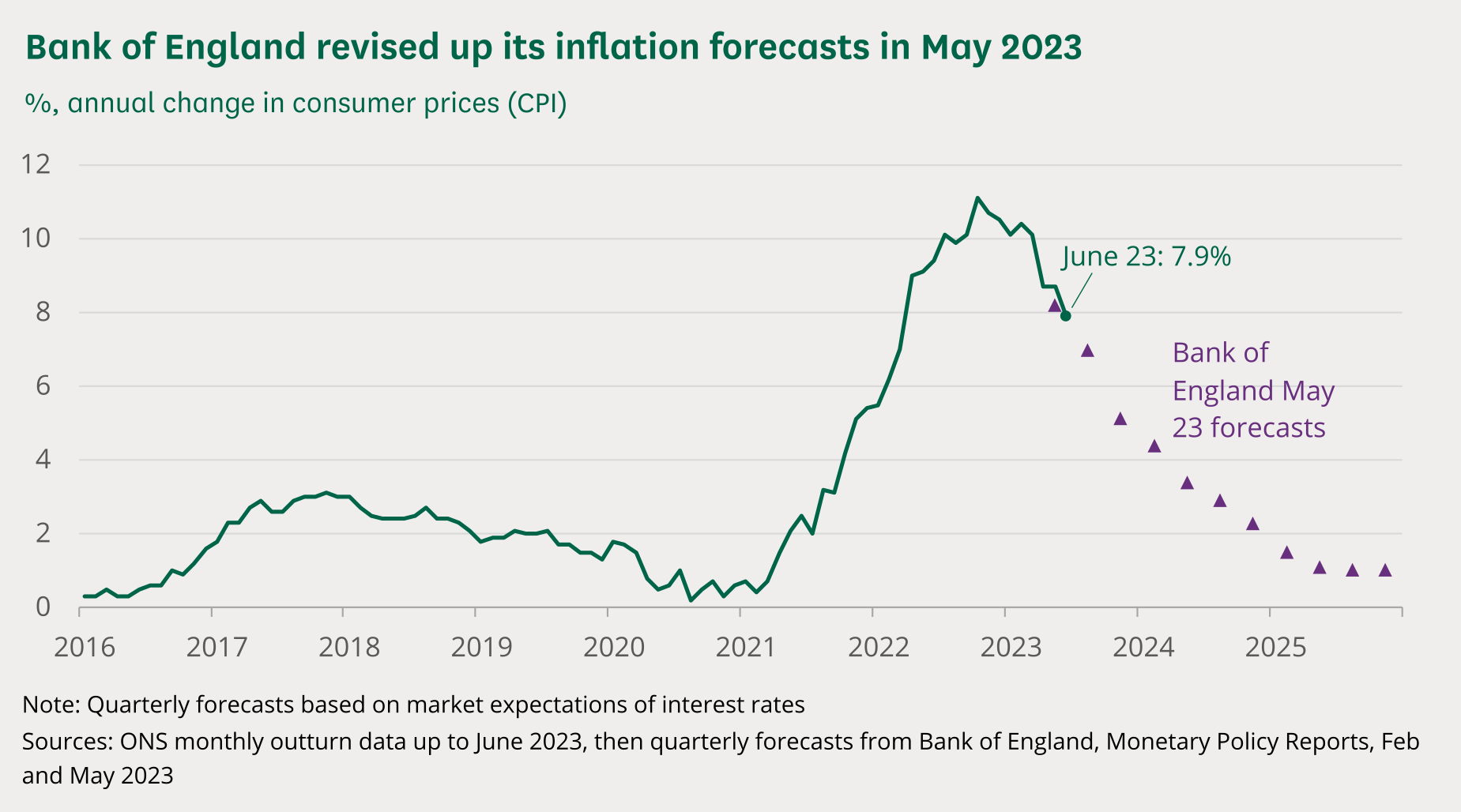
Closer to home, the UK is starting to feel the effects of consecutive interest rate rises, with house prices tumbling 3.8% in July, the biggest fall since July 2009, whilst UK factory output is also down sharply, as reported on August 1, 2023. Mortgage rates have eased from their peaks this year however, with a two-year now 6.81% and a five-year averaging 6.34%. Some are reading this as a sign that we have reached a pivot point, or the peak of the rate rising cycle, with the forthcoming BoE rate decisions expected to be either no change, or a revision downwards. Inflation also dropped to 7.9% in June which surprised many economists anticipating a reading of 8.2%, according to Reuters. Whilst the BoE may pause or reverse its interest rate increases moving forward, others believe it is not yet finished raising interest rates.
In the United States, which continues to defy the recession predictions echoing from earlier in the year and continuing to this day in many quarters, an announcement was made on 10th July by Michael Barr, the Federal Reserve’s vice-chair for supervision. He declared that the USA’s largest banks would have to increase capital by “two percentage points”, which we understand to mean that their capital-to-risk-assets ratios will have to rise by 2%. Whilst the aim is to strengthen the big banks prior to the losses they may incur in a forthcoming recession, unfortunately this potential benefit is bought at the certain cost of causing banks to restrict risk assets in the short term; this may be interpreted to mean further restricting of lending to companies and people and reducing the availability of credit. The unintended effect of this statement may therefore be to increase the risk of a recession in the first instance and potentially compound the effects of any recession that may yet occur.
Overall, the global financial picture is becoming increasingly complicated as different countries slow down whilst others continue to grow. As China falters, Malaysia, Vietnam and other ‘frontier’ economies continue their own growth stories. The US also defies recession, as does the UK, whilst the Eurozone is already in recession. The macro picture is the global economy is anticipated to grow by 2.5% - 3.0% this year. However, for amateur and professional investors alike, it remains an exceptionally difficult investment environment to navigate as beneath the macro picture, the complications persist.
As an example, at a glance the S&P 500 grew well in the first half of the year, up 16.9% - but 73% of that growth was driven by just seven companies. These seven firms gained $4tn+ between them in the first half of 2023, more than the GDP growth of Japan (third largest economy). Apple’s market capitalisation alone now exceeds that of the entire Russell 2000 index. In short, if you were not invested in technology to some degree, the S&P 500 rally of 2023 may have more or less completely passed you by.
A reactionary, fractured and uncertain global marketplace almost certainly offers scope for opportunity, but should be approached with caution. A long-term approach to investing at these junctures may pay dividends. Independent, professional financial and investment advice which offers the freedom to diversify selectively across the marketplace without bias is widely considered invaluable in this type of environment, to ensure you may potentially capitalise on opportunities as they arise.
Jonathan Cotty, Chartered FCSI

Distinctly Winkleigh is a quarterly publication, with a print run of one thousand copies, distributed free of charge to all homes in the Parish of Winkleigh, Devon, UK. It is also sent free of charge to paid-up members of the Winkleigh Society who live outside the Parish.
This article is for information purposes only and does not constitute financial advice, which should be based on your individual circumstances.
One feature of a busy quarter has been a splitting of minds over the future direction of the US economy. The Bears are certainly getting themselves heard at present, but the actual underlying figures are not nearly as bad as many would like to have us believe. The resilience of the US economy is probably not a surprise to all of us, but it continues to confound many economists who have been predicting a US recession for some considerable time now. Watching the financial news daily, many continue to insist it will come to pass towards the latter half of this year. However, with inflation falling, employment growing and, according to USA Today, only 17% of corporate economists citing falling sales over the past three months, the Bulls still have a good case as supply bottlenecks continue to ease. The US, for now, powers on.
Power is certainly proving troublesome in the UK, as our reliance on wholesale gas for electricity generation remains an obstacle to economic recovery. The ONS reports electricity prices in the UK rose by 66.7% and gas prices by 129.4% in the twelve months to March 2023 and were some of the main drivers of the annual inflation rate. The potential over-tightening by the Bank of England, or the continued raising of interest rates beyond a sensible level, is also a hot topic. There are increasing calls to resist over-tightening, given the effects of rate rises on the real economy are delayed and household finances remain under extreme pressure. The Bank of England, traditionally held in high regard, have in recent years lost some credibility and this persists. On the 26th April Huw Pill, chief economist at the Bank of England on a salary of £180,000, went on record to state people ‘need to accept’ they are poorer. Confidence in the BoE’s ability to manage a genuine crisis is becoming a more fundamental concern. Meanwhile, the government has actually borrowed less than predicted over the last financial year and Reuters report that many are predicting Hunt will announce a package of tax cuts ahead of a likely general election next year as a result.
Changes in the budget to pension rules have been widely reported upon, affecting those who can afford to save more than £1,073,100 into their individual pension scheme/s. This tax break has been introduced alongside a reduction in the Annual Exemption Allowance (AEA), relating to Capital Gains Tax, reduced from £12,300 to just £6000 this tax year and due to be halved again to £3000 next year. Further cuts have also been confirmed to the Dividend Allowance which stood at £5000 in 2018; now just £1000 and next fiscal year a mere £500.
Taking advantage of all your annual tax allowances has become imperative and many are now seeking independent financial advice for the first time.
For example, one client we recently onboarded was widowed years ago and, for convoluted reasons, had her deceased husband’s offshore pension paid out as cash. She has been using her annual ISA Allowance ever since, but now has accumulated Capital Gains of circa £57,000 in her General Investment Account, whilst the underlying investment portfolio needs attention. The changes in taxation policy mean that selling down her existing portfolio (at current levels) without incurring a capital gain liability would now take eighteen years, instead of five! An independent financial advice and investment management firm may ensure an over-arching, tax-efficient plan is devised, potentially retaining holdings with an excessive capital gain within a suitable, bespoke portfolio.
In other news, Japan announced a review of their long-term policy of deliberately keeping the yen depressed. An increase in the value of the yen is likely to cause a repatriation of monies back to Japan and, with Japan’s insurers and pension funds alone holding $1.84 Trillion in foreign assets, it is potentially a seismic shift in wealth. Japanese investors are also the biggest holders of US Treasuries, or US government debt, owning over $1 trillion of them and they also own almost 6% of Australian bonds and 4.1% of French debt, according to Deutsche Bank. This shift in monies will not happen overnight, but the implication that it will happen has created ripples across the globe.
Looking ahead, global liquidity remains on the radar. When Quantitative Easing (QE) is reversed, as is happening now, money is sucked out of the real economy as banks look to purchase the assets now being sold by the government/s who initially bought them. The effect is generally to reduce the amount of money banks want to lend to businesses and private individuals. This is happening whilst Central Banks increase interest rates (to combat inflation), also making borrowing more expensive. As cash becomes harder to borrow and increasingly expensive to repay, this in turn stifles economic growth. At present, it looks like access to capital, both for investment and refinancing, will remain expensive for some time to come, in turn inferring a global slowdown is unavoidable.
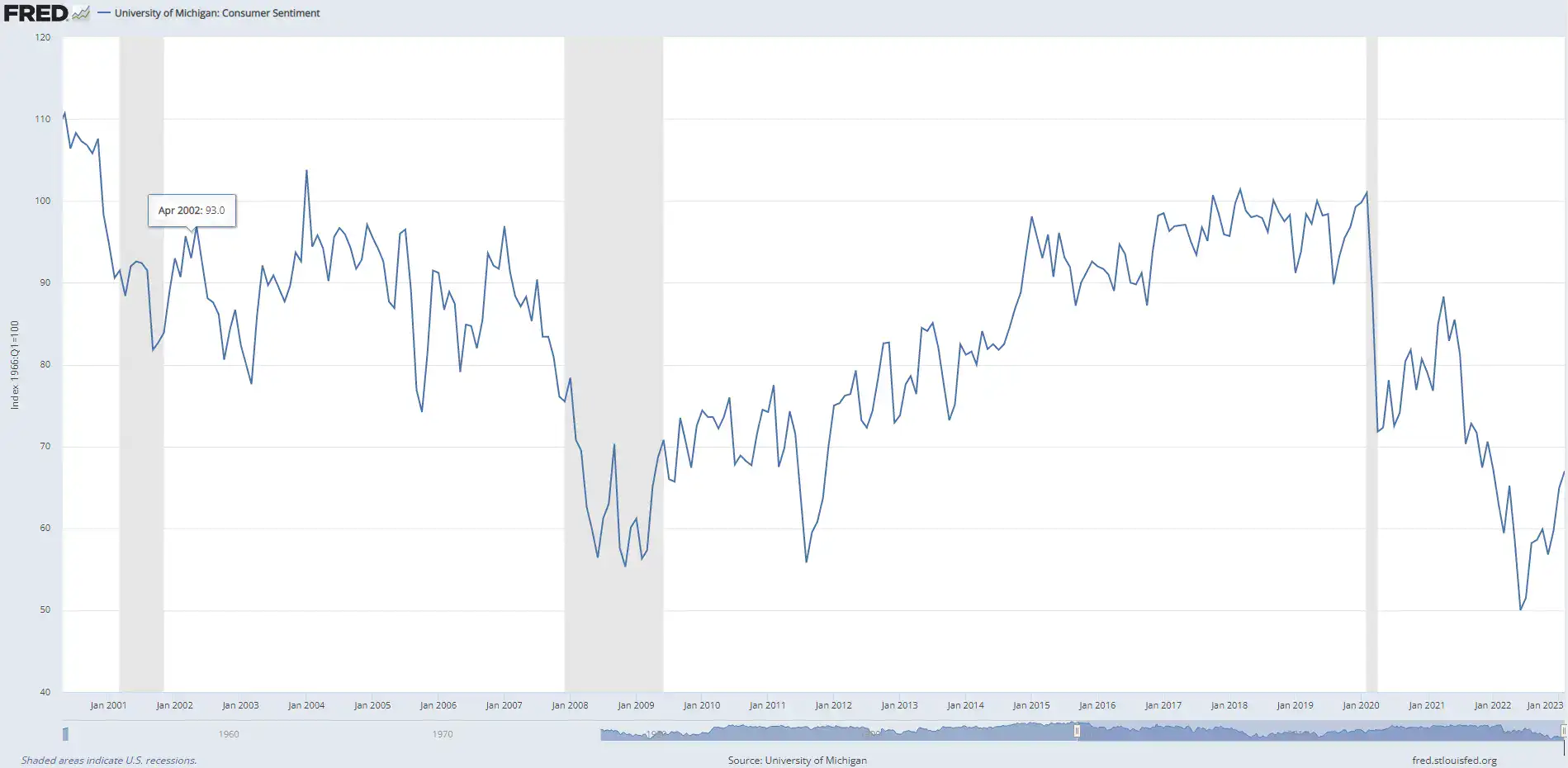
However, as proven by recent supply bottlenecks choking the US, a global slowdown does not a recession make and there are various routes to raising capital nowadays that exclude banks completely. US sentiment bottomed on June 30, 2022 at 50.00 and has risen every month, bar one, since that time. Currently 63.50, many concur the next couple of months will be telling…Up or down?
Jonathan Cotty, Chartered FCSI

Distinctly Winkleigh is a quarterly publication, with a print run of one thousand copies, distributed free of charge to all homes in the Parish of Winkleigh, Devon, UK. It is also sent free of charge to paid-up members of the Winkleigh Society who live outside the Parish.
This article is for information purposes only and does not constitute financial advice, which should be based on your individual circumstances.
Following over a decade of rock-bottom interest rates, the rise in interest rates in December 2021 offered some comfort to millions of savers. Sadly, this relief proved short-lived. By July 2022, savers were staring aghast at an inflation level unprecedented for forty years and recent predictions (from a poll of global asset and hedge fund managers published by Reuters in January 2023) are for inflation to remain elevated globally, persisting throughout this year. Given there can be little comfort in locking monies into a cash savings plan offering 4.5% whilst inflation is running at more than twice this level, the question that continues to prey on the minds of many private individuals is where best to put their money.
Made with
Offline Website Builder